Why Countries Are Buying More Gold in 2026
John Boston
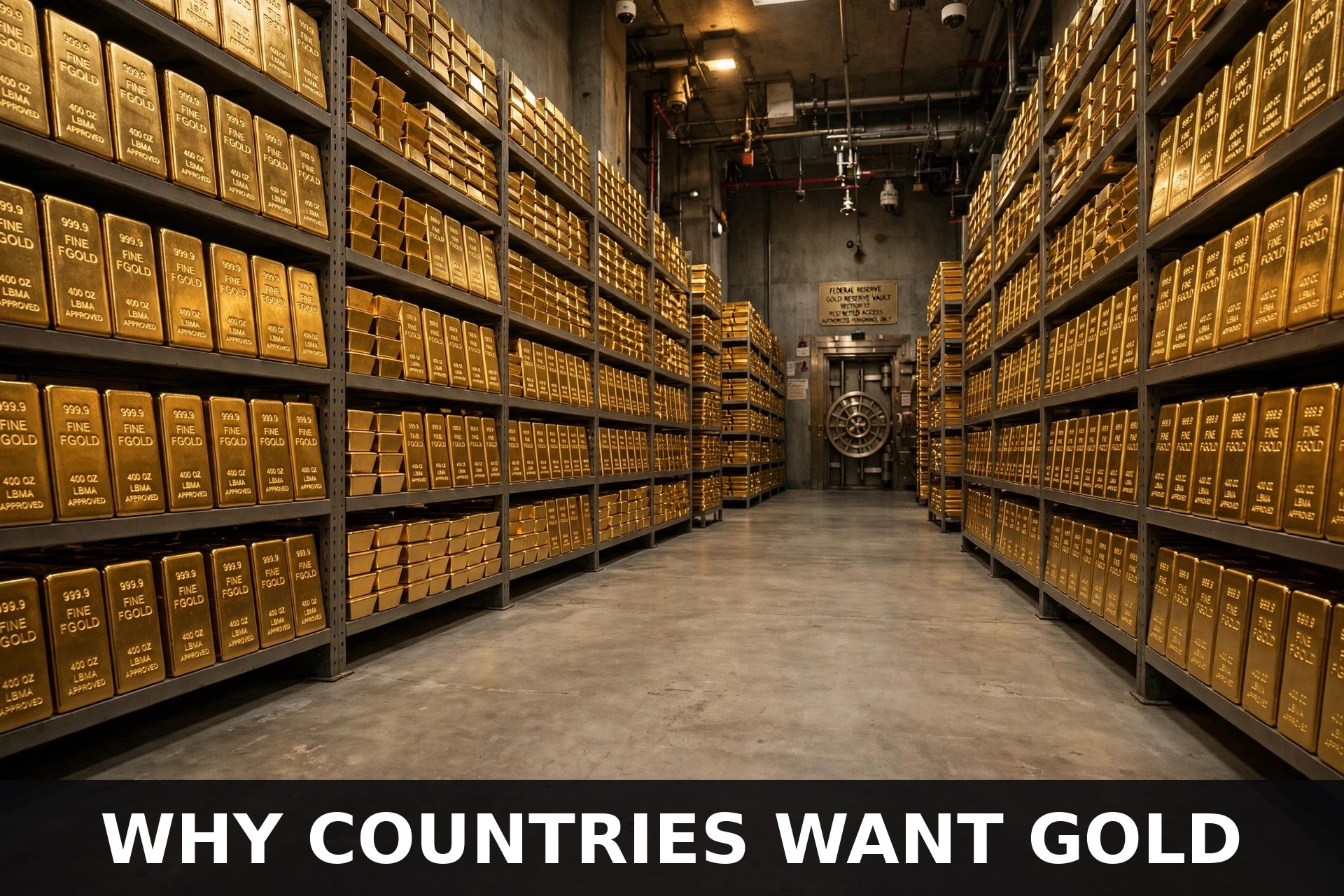
Gold pays no interest, has no boss to answer to, and cannot be printed into existence. Right now, the institutions that manage the world's money cannot seem to get enough of it. Central banks — the banks that hold a country's reserves — have been buying gold at a pace not seen in generations, and the buying is still going strong in 2026.
So what is going on? Why would the most cautious money managers on earth suddenly want warehouses of yellow metal? The answer says a lot about trust, sanctions, and where the global financial system may be drifting — and, handled carefully, a little about what it means for the rest of us.
The short answer
Countries are buying more gold because they want a reserve asset that no other government can freeze, devalue by printing, or default on. The turning point was 2022, when roughly $300 billion of Russia's foreign reserves were frozen after its invasion of Ukraine. Reserve managers everywhere took note: money held in someone else's currency can be switched off. Gold sitting in your own vault cannot.
Add three more motives — spreading reserves across more than one currency, insurance against inflation and financial crises, and a world that feels more politically fragmented — and you get the strongest sustained run of official gold buying in decades. According to the World Gold Council, central banks bought more than 1,000 tonnes of gold in each of 2022, 2023 and 2024, added 863 tonnes in 2025, and bought a further 675 tonnes in the first nine months of 2026.
How much gold are countries actually buying?
To see how unusual this is, compare it with the quiet years. Between 2010 and 2021, central banks bought an average of 473 tonnes a year. Then the pace roughly doubled and stayed there:
- 2022: 1,082 tonnes
- 2023: 1,037 tonnes
- 2024: 1,092 tonnes
- 2025: 863 tonnes
- First nine months of 2026: 675 tonnes
Those figures come from the World Gold Council's Gold Demand Trends reports, the standard source for this data. Two details are worth knowing. First, central banks have now been net buyers every year since 2010 — this is a long trend that accelerated, not a sudden fad. Second, a large slice of the buying is never announced: the Council estimates that unreported purchases made up around 57% of the 2025 total, and about 63% of buying in the third quarter of 2026. The true pace is, if anything, larger than the headline numbers.
The newest data, published on November 3, 2026 in the Council's Q3 2026 report, shows the appetite is not fading: 321 tonnes bought in a single quarter, 42% more than the same quarter a year earlier and the strongest quarter since late 2024. The Council now expects full-year 2026 purchases to at least match 2025.
Why central banks want gold
It cannot be frozen
This is the reason that changed in 2022. A country's reserves are usually held as other countries' currency and government bonds, stored inside the financial system of the country that issued them. That works until politics intervenes. When Western governments froze roughly $300 billion of Russian reserves, every reserve manager on earth saw the same lesson: reserves you do not physically control can be taken off the table in a crisis. Gold bars in a domestic vault have no off switch.
It is nobody else's promise
A bond is a promise by a government to pay. A bank deposit is a promise by a bank. Gold is not a promise at all — it does not depend on anyone's credit, cannot default, and does not need a functioning payment system to be worth something. For an institution whose whole job is to be ready for the worst week in a generation, that independence is the point.
Diversification, plain and simple
Most reserves sit in US dollars, because the dollar is the world's main trading and borrowing currency. But holding almost everything in one currency is a concentration risk, and many central banks — particularly in emerging markets — have been trimming that concentration for years. Gold is the natural diversifier: it is traded everywhere, priced in every currency, and tends to behave differently from bonds when markets panic.
Insurance against inflation and crisis
Central banks also remember what gold is for. It has held purchasing power across centuries in a way no paper currency is designed to, and it tends to perform when other assets are in trouble. In the World Gold Council's 2026 survey of central banks, respondents ranked gold's long-term store of value and its performance in times of crisis among the top reasons for holding it.

Who is buying the most gold?
The single biggest buyer, two years running, is one many people do not expect: Poland. The National Bank of Poland added 102 tonnes in 2025, taking its reserves to 550 tonnes — about 28% of everything it holds. It has raised its target share to 30%, and its governor has said he wants to reach 700 tonnes, citing national security. Geography explains a lot: Poland borders the war in Ukraine and wants reserves that cannot be touched from outside.
Behind Poland, the 2025 buyers included Kazakhstan (57 tonnes, its biggest year on record), Brazil (43 tonnes, returning to the market for the first time since 2021), Turkey (27 tonnes) and the Czech Republic (20 tonnes, building toward a stated target of 100 tonnes by 2028). China's central bank added a reported 27 tonnes in 2025, taking its declared reserves to 2,306 tonnes, and was the largest reported buyer in the third quarter of 2026 with 63 tonnes.
Notice the pattern: the buyers are overwhelmingly emerging-market and non-Western central banks, plus a few European ones near the conflict in Ukraine. Sellers, by contrast, are rare and small — Singapore sold 15 tonnes in 2025, and almost nobody else of note sold at all. And remember the unreported share: the official league table only shows the countries willing to be seen buying.
What this signals about the US dollar
Headlines often turn this story into "the dollar is finished." The data says something slower and more interesting. The dollar remains the world's dominant reserve currency by a wide margin — most reserves, most trade invoicing, and the deepest government bond market are still American. Nobody serious is describing a replacement.
What is changing is the margin. The European Central Bank calculated that, measured at market prices, gold became the world's second-largest reserve asset in 2024 — ahead of the euro, behind only the dollar. And in the World Gold Council's 2026 survey, 74% of central banks said they expect the dollar's share of global reserves to be lower in five years, while 84% expect gold's share to be higher. Think of it less as countries leaving the dollar and more as countries quietly buying insurance alongside it.
What the gold buying does not mean
Three cautions keep this story honest. First, central banks are not speculating. They buy for security and diversification, on timelines measured in decades, and they are price-sensitive: buying cooled in 2025 partly because gold kept setting record prices, and reserve managers chose to slow down rather than chase. Second, gold can fall and stay down — it has had long, grinding declines in the past, and a buyer at a record price can wait years to be proven right. Third, official buying is one source of demand among several; it supports the market, but it does not guarantee any price, in either direction.
Does this mean you should buy gold?
Not automatically — and this is where it helps to remember that a central bank's job is not your job. A central bank buys gold to protect a nation's reserves in a crisis. It does not need income from its reserves, it does not pay a premium to a dealer, and it has a vault. A household investor faces a different set of facts, and this article is education, not a recommendation either way.
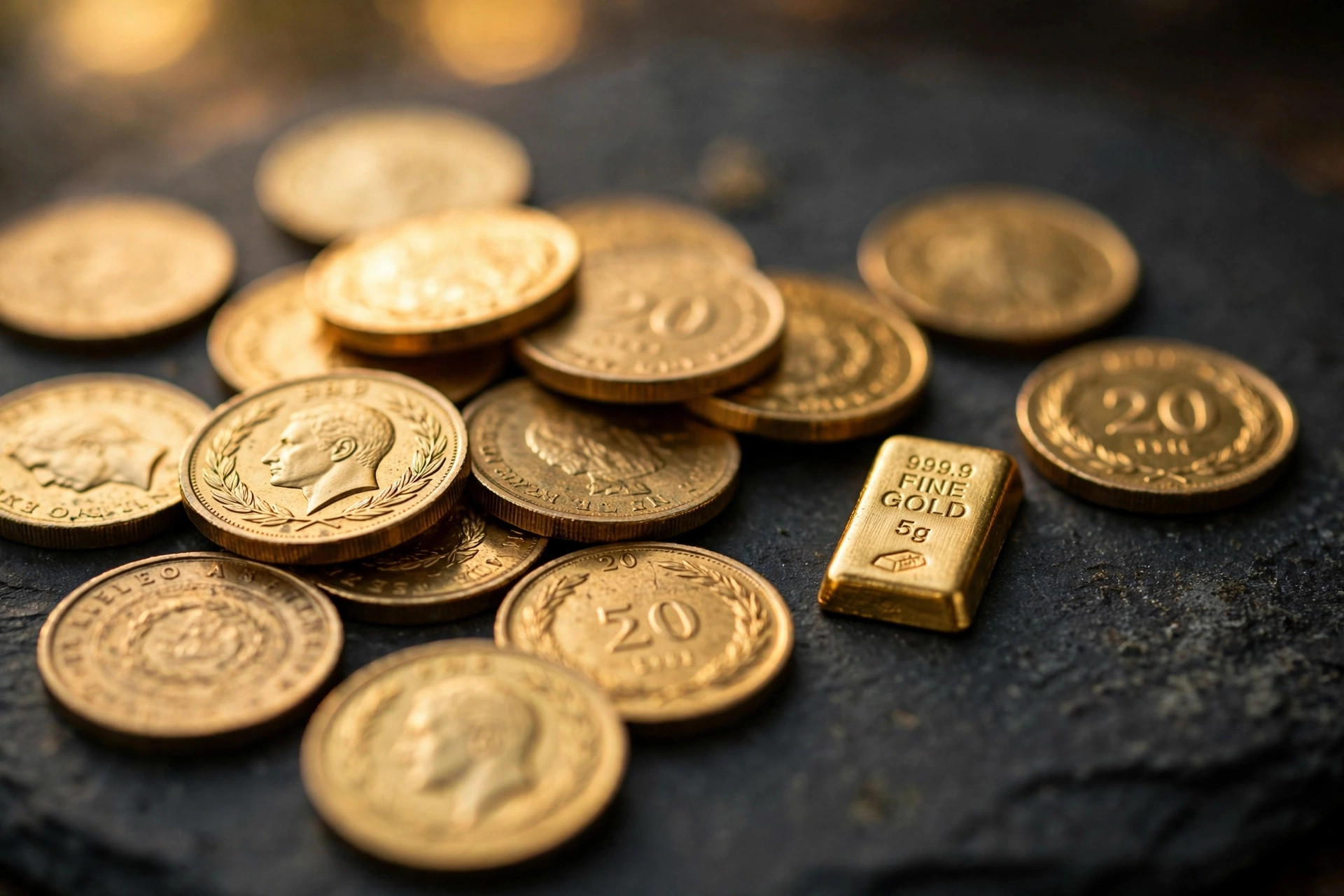
If people do hold gold, it is usually in one of three forms, each with its own costs. Physical coins and bars are simple to understand but carry dealer premiums when you buy, a spread when you sell, and the practical problem of storage and insurance at home. Gold-backed exchange-traded funds (ETFs) hold bars in professional vaults and trade like a stock, charging a small annual fee instead — convenient, but you own a fund share, not metal you can hold. Shares in gold mining companies are a third route, but those are company shares, with company risks, and they can move quite differently from the gold price itself.
The downsides deserve equal time. Gold pays no interest and no dividends, so its entire return depends on someone paying more for it later. Its price swings — sometimes sharply — and after a run to record highs, those swings can be painful. Physical gold adds premiums, storage and insurance on top. None of that makes gold good or bad; it makes it a specific tool with specific costs, which is exactly how the central banks themselves describe it. If you follow gold alongside currencies and crypto, you can watch how markets are pricing it day to day on FundMil's exchanges hub.
Frequently Asked Questions
Which country is buying the most gold?
Poland. The National Bank of Poland added 102 tonnes in 2025, making it the largest reported buyer for the second year running, according to the World Gold Council. In the third quarter of 2026 the largest reported buyer was China, with 63 tonnes, followed by Poland with 40 tonnes. A large share of central bank buying is never reported by country, so any league table is incomplete.
How much gold did central banks buy in 2025?
863 tonnes, according to the World Gold Council's Gold Demand Trends full-year report. That was 21% less than in 2024, but still roughly 82% above the 2010–2021 annual average of 473 tonnes.
Why did central bank gold buying jump after 2022?
The turning point was the freezing of roughly $300 billion of Russia's foreign reserves in 2022. It showed reserve managers that reserves held in another country's currency can be switched off in a crisis. Gold held in your own vault cannot, which pushed many central banks — especially in emerging markets — to hold more of it.
Is gold replacing the US dollar as the world's reserve currency?
No. The dollar is still the dominant reserve currency by a wide margin, and central banks still hold most of their reserves in dollars and dollar assets. What is happening is gradual diversification at the edges: in the World Gold Council's 2026 survey, 74% of central banks expected the dollar's share of global reserves to be lower in five years, and gold became the second-largest reserve asset at market prices in 2024, behind only the dollar, according to the European Central Bank.
Will central banks keep buying gold in 2026 and 2027?
The evidence points that way. Central banks bought 675 tonnes in the first nine months of 2026, and the World Gold Council expects full-year purchases to at least match 2025. In its 2026 survey, 89% of central banks expected global gold reserves to rise over the following 12 months, and a record 45% expected their own institution to buy more.
The Bottom Line
Countries are buying more gold because 2022 taught them that reserves are only truly yours if nobody else can switch them off. The buying — over 1,000 tonnes a year in 2022, 2023 and 2024, 863 tonnes in 2025, and still running in 2026 — is best read as insurance being bought steadily, in the open and under the radar, not as a bet against the dollar or a tip for your own portfolio. For another recent story about what happens when control of assets turns out to be weaker than it looked, see our explainer on how $6.3 billion was drained from Binance.
Sources: World Gold Council, Gold Demand Trends (full year 2025 and Q3 2026) and the 2026 Central Bank Gold Reserves Survey; European Central Bank analysis of international reserves (2025). Figures are the Council's published estimates and are revised from time to time, particularly its estimates of unreported buying.
Disclaimer: This article is for general education only and is not financial, legal, or tax advice. Gold prices move in both directions and past demand trends do not predict future prices. Consider speaking with a qualified professional before making decisions about your own money.
Related guides
- Binance Hack Explained: How $6.3 Billion Was Stolen in Crypto's Biggest Theft
Attackers drained about $6.3 billion from Binance across 10 blockchains in roughly 20 minutes. How they got in, who analysts blame, how much is frozen, and what exchange users should do now.
- How to Do a No-Spend Week in 2026: A Simple 7-Day Reset That Actually Feels Doable
How to do a no-spend week: set your own rules, stock the kitchen, plan free activities, and use seven days to notice where your money usually slips away.
- How to Save for Moving Costs in 2026: A Simple Plan That Actually Works
How to save for moving costs and a security deposit: list every cost, get real quotes, add a buffer, and save a fixed amount each payday so the big bills do not land all at once.