Financial Insights Hub
Explore sophisticated commentary, index allocations, interest trajectory reviews, and milestone guidelines.
How to Save $1,000 in 3 Months (A Week-by-Week Plan That Fits Real Paychecks)
Saving $1,000 in three months is about $77 a week, thirteen times. A week-by-week plan that fits real paychecks: automate it on payday, find the weekly amount in your current spending, and track it somewhere visible.
Read Story
Sinking Fund Categories: The Complete List, Prioritised by Your Situation
Long sinking fund category lists do not tell you where to start. Prioritised starter sets by situation - renter or homeowner, car or no car, kids or no kids - so you can pick your first 3 to 5 funds.
Read Story
What Bills to Pay First When Money Is Tight (A Calm Priority Order)
Can't cover everything this month? A calm priority order for tight months: housing, utilities, food and transport before unsecured debt — plus who to call before you miss a payment.
Read Story
How to Budget for Annual Bills: A 12-Month Calendar That Ends Surprise Bills
Annual bills only feel like surprises because they are not on a calendar. A 12-month map of irregular expenses, with a per-paycheck amount for each bill.
Read Story
How to Budget When You Get Paid Every Two Weeks (The Simple Paycheck Plan)
Paid every two weeks? Learn how to budget when you get paid every two weeks: split bills across paychecks, handle the two three-paycheck months, and make each check last.
Read Story
How to Budget as a Couple: Split Bills Fairly and Plan Together
Budgeting as a couple works when the split is fair and the plan is shared. Learn how to budget as a couple with a proportional bill split example, three account setups, and a simple monthly money date.
Read Story
Explore the World's Gold Reserves by Country
Gold reserves by country, ranked: the top 50 holders, where nations store gold abroad, and the 2026 moves out of New York. Latest WGC figures.
Read Story
How to Pay Off Credit Card Debt on a Low Income (Without a Huge Salary)
How to pay off credit card debt on a low income: stop the balance growing, pick snowball or avalanche, and ask your card company for help.
Read Story
How to Dispute an Error on Your Credit Report (And What Happens Next)
Found a mistake on your credit report? How to dispute it step by step — the timeline, what to do if it comes back verified, and the mistakes to avoid.
Read Story
How to Save Money on a Low Income: Small Amounts, Saved on Purpose
Saving on a low income is possible with small, automatic amounts. Learn how to save money on a low income with payday transfers, one bill at a time.
Read Story
How to Save for a House Down Payment on a Low Income, Month by Month
You do not need 20% down to buy a first home. Save for a house down payment on a low income with a month-by-month plan, 3% and 3.5% loans, and assistance.
Read Story
How to Budget With Irregular Income: A Calm Plan for Paychecks That Change
Budget with irregular income: base your plan on your lowest month, build a buffer in good months, and pay bills in priority order so slow months stay calm.
Read Story
How to Do a No-Spend Week in 2026: A Simple 7-Day Reset That Actually Feels Doable
How to do a no-spend week: set your own rules, stock the kitchen, plan free activities, and use seven days to notice where your money usually slips away.
Read Story
Why Countries Are Buying More Gold in 2026
Central banks bought over 1,000 tonnes of gold a year from 2022 to 2024 and are still buying in 2026. Why they want gold, and what it means for you.
Read Story
How to Save for Moving Costs in 2026: A Simple Plan That Actually Works
Save for moving costs and a security deposit: list every cost, get real quotes, add a buffer, and save a fixed amount each payday toward the move.
Read Story
How to Negotiate a Lower Bill in 2026: A Calm, Step-by-Step Guide
Negotiate a lower bill for internet, phone and insurance: prepare in five minutes, use a calm script, and check the small print before you agree.
Read Story
How to Split Shared Expenses Fairly in 2026: A Simple Guide for Roommates and Couples
Split shared expenses fairly with roommates or a partner: list shared costs, choose a split method, write it down, and settle up once a month.
Read Story
How to Set a Holiday Gift Budget in 2026 (Without the January Regret)
Set a holiday gift budget you can stick to: pick one affordable total, list everyone, add a buffer for wrapping and postage, and shop from the list.
Read Story
Binance Hack Explained: How $6.3 Billion Was Stolen in Crypto's Biggest Theft
Attackers drained about $6.3 billion from Binance across 10 blockchains in roughly 20 minutes. How they got in, how much is frozen, and what users should do.
Read Story
How to Audit Subscriptions and Save Money in 2026: A Simple Step-by-Step Guide
A calm, step-by-step subscription audit: find every recurring charge, sort each into keep, pause, or cancel, and stop paying for forgotten services.
Read Story
Monthly Money Reset Checklist for 2026: A Simple End-of-Month Routine That Actually Sticks
A monthly money reset checklist: review last month's spending, put bills on one calendar, audit subscriptions, and plan next month in about 30 minutes.
Read Story
How to Read a Pay Stub: Gross Pay, Deductions, and Take-Home Pay in 2026
Read a pay stub in plain language: gross pay, deductions, take-home pay, pay period, overtime and YTD, with a worked example and a payday checklist.
Read Story
Your First Paycheck: A First-Job Budget That Covers Needs, Savings, and Fun
Budget your first paycheck: split it between needs, savings and fun, avoid the first-paycheck traps, and set up a simple plan you can stick to.
Read Story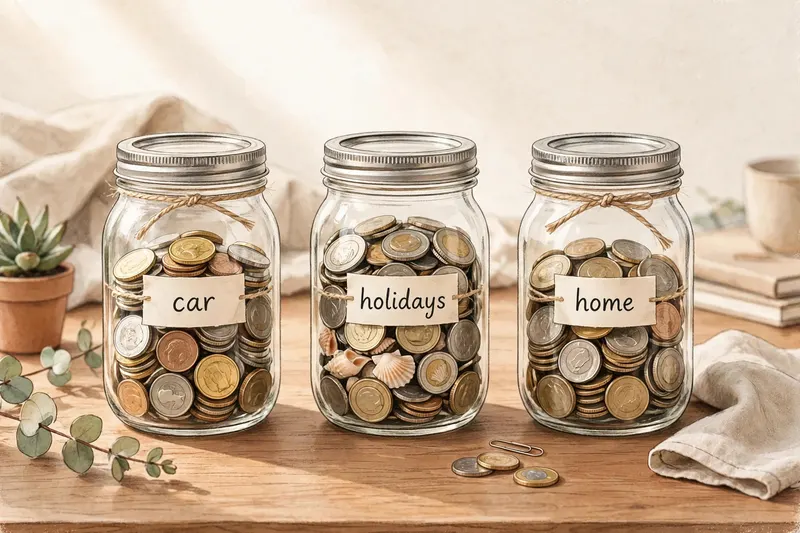
Sinking Funds: How to Save for Irregular Expenses Without Touching Your Emergency Fund in 2026
What is a sinking fund? How to start one and calculate your monthly amount — a guide to saving for irregular expenses without raiding your emergency fund.
Read Story
Emergency Fund: How Much You Really Need and Where to Keep It in 2026
How to build an emergency fund in 2026: how much to save, how to calculate your number, where to keep it, and what counts as a real emergency.
Read Story
How to Build Credit From Scratch When You Have No Credit History
A practical guide to build credit from scratch: secured cards, authorized user risks, credit-builder loans, rent reporting, and how long it actually takes.
Read Story
Best Balance Transfer Credit Cards to Kill High-Interest Debt Fast
Find the best balance transfer credit cards to stop paying high interest. We compare top offers, explain the fees, and show you how to move debt
Read Story
How to Negotiate Your Rent Before Signing a Renewal in 2026
Learn how to negotiate your rent before signing a renewal. Discover timing tips, market research, counteroffers and lease renewal strategies.
Read Story
Term vs. Whole Life Insurance: Which One Actually Fits Your Budget?
A clear-eyed comparison of term vs whole life insurance, with actual premium numbers, cash value math, and who each policy really fits.
Read Story
Does the 50/30/20 Budget Rule Still Work in 2026?
Rent has outpaced income for a decade. Here's whether the 50/30/20 budget rule still holds up, and what to use instead if it doesn't.
Read Story
Buy Now, Pay Later: The Hidden Debt Trap No One Warns You About
Buy now pay later debt piles up quietly across apps, fees, and credit reports. Here's how it actually works and what stops it before it starts.
Read Story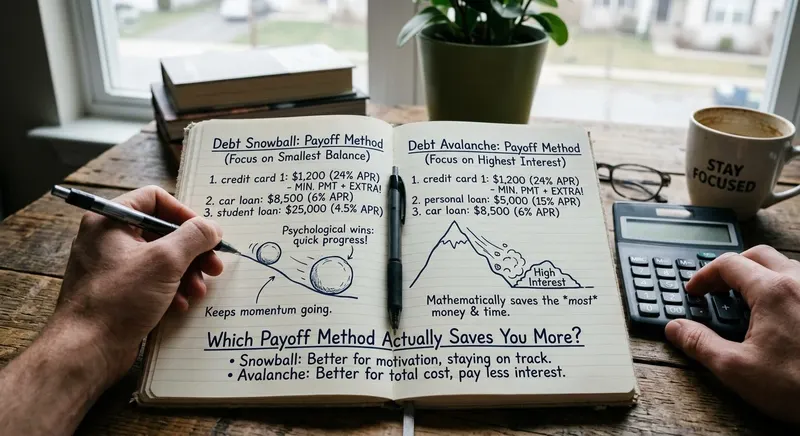
Debt Snowball vs. Debt Avalanche: Which Payoff Method Actually Saves You More
Compare debt snowball vs avalanche methods with real research and numbers to find which payoff strategy actually fits your finances in 2026.
Read Story
Passive Income 2.0: 5 AI-Driven Side Hustles to Fast-Track Your Early Retirement
I spent 15 years learning how to build real passive income. Here is the actual way to use AI for financial independence and your early retirement strategy.
Read Story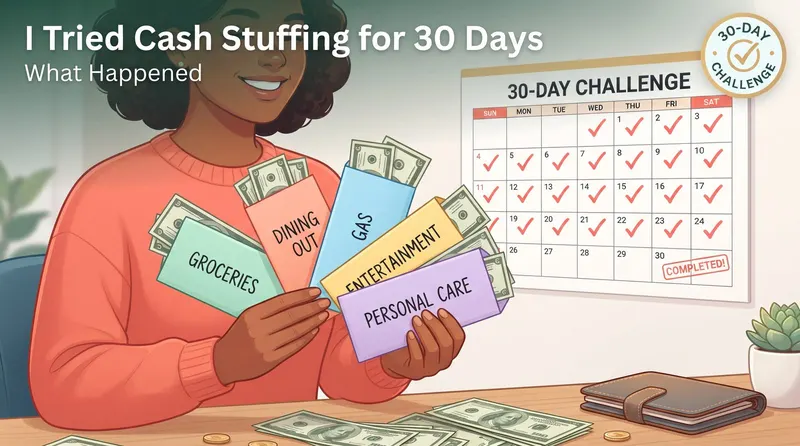
I Tried Cash Stuffing for 30 Days — Here's What Happened
Cash stuffing for 30 days: how envelope budgeting changed a month of spending, where the money was saved, and where the method fell short.
Read Story
Online Business Ideas That Actually Make Money
Real online business ideas that actually make money, no hype. Here's what worked, what flopped, and what I wish I'd started with sooner.
Read StoryCompounding Interest Calculator Guidelines
Learn how index funds and active funds have compared over long periods, and how to design a dividend growth blueprint. Past performance does not guarantee future results.