How Much Should You Spend on Groceries for a Family of 4?
Luci Shut
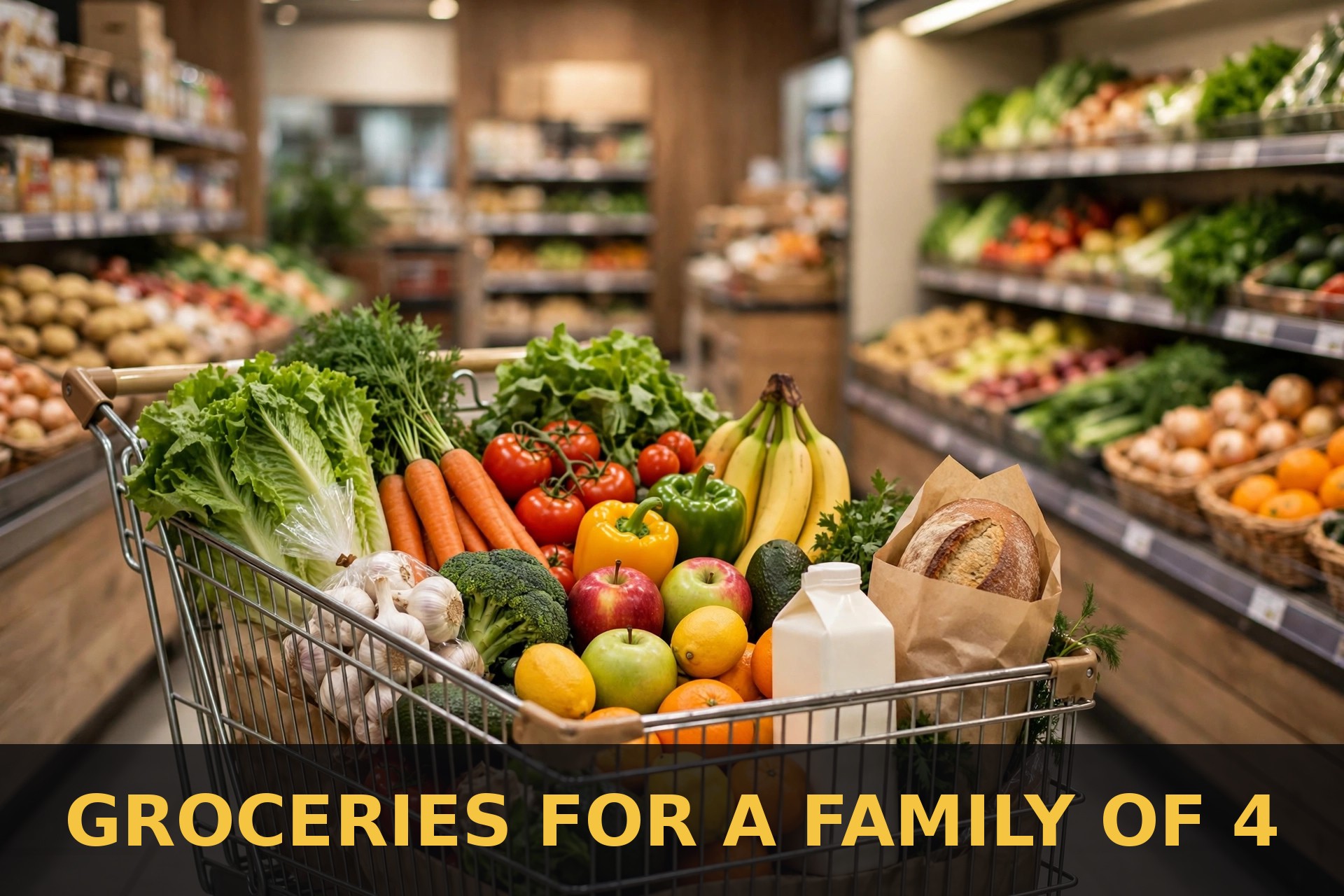
Groceries are the bill that never looks the same twice. One week it is $140, the next it is $260, and by the end of the month you are staring at your bank statement wondering whether your family spends a normal amount on food — or way too much.
Good news: you do not have to guess. The US Department of Agriculture (USDA) publishes official food plans that estimate what a nutritious diet at home costs at four different spending levels. Here is what those benchmarks say for a family of four in 2026, how to find where your family lands, and how to move down a level without anyone feeling short-changed at the table.
The Short Answer: The USDA's Four Food Plans
The USDA's reference family of four is two adults (ages 20–50) and two children (ages 6–8 and 9–11). Its 2026 monthly estimates for groceries — food prepared at home — look like this:
| USDA food plan | Approx. cost per month | Approx. cost per week | What it looks like |
|---|---|---|---|
| Thrifty | ~$1,024 | ~$236 | The tightest realistic budget; careful planning, mostly cooking from scratch. This plan is also the basis for SNAP benefit amounts. |
| Low-cost | ~$1,127 | ~$260 | Budget-conscious but comfortable; store brands, some convenience foods. |
| Moderate-cost | ~$1,389 | ~$321 | The middle ground most comparisons use; a mix of fresh, frozen, and some premium items. |
| Liberal | ~$1,682 | ~$388 | Generous; more premium meats, out-of-season produce, and convenience foods. |
Figures are rounded from the USDA's official food plans (September 2026 report) and are updated by the USDA as food prices change. They are national averages — your local prices may be higher or lower.
So a reasonable grocery budget for a family of four in 2026 sits somewhere between about $1,024 and $1,682 a month, with the low-cost-to-moderate range (roughly $1,127–$1,389) being where many families aim.
Three Things These Numbers Assume
Before you compare your own spending to the table, it helps to know what the USDA figures include — and what they do not.
They assume nearly all food is prepared at home. The plans cover groceries for meals and snacks made at home. Takeaways, restaurant meals, school cafeteria lunches, and the Friday pizza are not in these numbers. If your family eats out twice a week, your total food spend will sit above the plans even if your grocery trolley matches them exactly.
They cover food, not the whole supermarket receipt. Nappies, cleaning supplies, pet food, shampoo, and bin bags ride home in the same bags, but they are not part of the food plans. If your "grocery" total includes household items, subtract them before you compare — many families discover they were never over budget on food at all.
They depend on ages. A family with two teenagers will out-eat the reference family's two primary-school children, and a family with a toddler will spend less. The USDA also publishes adjustments for household size: as a rough guide, add 20% for a one-person household, 10% for two people, and 5% for three; subtract 5% for five or six people and 10% for seven or more, because bigger households buy more efficiently.
Finding Your Number
Work through it in three quick steps:
- Track one honest month. Add up what you actually spent on groceries only (food and drink for home). Keep eating out separate.
- Locate yourself on the table. Spending near $1,682? You are eating at the liberal level — fine if the budget allows it, a problem if it does not. Near $1,127? You are already running a low-cost kitchen.
- Pick a target one step away. If a change is needed, aim to move one plan level, not three. Dropping from liberal to moderate is roughly $293 a month — meaningful money — without the family feeling like the rules changed overnight.
Where does this sit in the whole budget? A grocery target works best as one line in a simple monthly plan. Our monthly money reset checklist shows how to review lines like this once a month so small creeps get caught early.
A Worked Example (Illustrative Only)
This example uses round, invented numbers to show the method — it is not spending data. Imagine the Alvarez family (two adults, two kids) tracks a month and finds they spent $1,580 on groceries, plus $240 on takeaways.
Their grocery spend sits between the moderate (~$1,389) and liberal (~$1,682) plans, so they set a target of $1,400 for groceries and keep takeaways as a separate $150 line. The $180 monthly difference they are aiming for goes to their emergency fund instead. No food group was banned — the change is a target and a weekly check-in, not a crackdown.

How to Spend Less Without Eating Worse
If your comparison says a change would help, these are the levers that usually matter most:
- Plan the week's meals before you shop. Most overspending happens on unplanned top-up trips, not the main shop.
- Write a list from the plan — and shop the list. It sounds obvious because it works.
- Build two or three cheap anchor meals your family genuinely likes (a pasta bake, a bean chilli, a stir-fry) and rotate them weekly.
- Use frozen and store-brand where nobody can tell. Frozen vegetables and store-brand staples are usually the easiest savings with zero complaints.
- Watch the "middle shop." Drinks, snacks, and treats bought between main shops add up quietly. Give them their own small line so you can see them.
- Do a fridge audit before shopping. Buying a second bag of salad while one wilts at home is a quiet budget leak.
What If You Can't Get Near the Thrifty Plan?
Then you are in good company. The thrifty plan is a floor, not a lifestyle recommendation — it assumes careful planning, scratch cooking, and very little waste or convenience. It is also the plan SNAP benefits are based on, which tells you it is designed as a minimum.
If money is genuinely tight, it is worth checking whether your household qualifies for SNAP (food assistance) or local food support — that is what those programs exist for. And if your grocery bill is high mainly because of medical diets, allergies, or baby formula, your realistic number will be higher than the table, and that is okay. Benchmarks are for orientation, not judgement.

Frequently Asked Questions
What is the average grocery bill for a family of 4 in 2026?
Using the USDA's food plans, the range runs from about $1,024 a month (thrifty) to about $1,682 (liberal) for a family of two adults and two children, with the moderate plan at roughly $1,389. Most families comparing budgets use the low-cost-to-moderate range as their reference point.
Does the USDA number include eating out?
No. The food plans estimate the cost of food prepared at home. Restaurants, takeaways, and delivery are on top of these figures, so track them as a separate budget line.
Why is my bill higher than the moderate plan even though we cook a lot?
Common reasons: teenagers (the reference children are 6–8 and 9–11), higher local prices, special diets, and household items hiding inside the "grocery" total. Any one of these can explain the gap.
How much should a single person spend on groceries?
The USDA prices individuals too, and suggests adding 20% for a one-person household because buying for one is less efficient. As a rough orientation from the same plans, a single adult's grocery budget lands somewhere in the low-to-mid hundreds per month depending on the plan level — check the USDA's current monthly report for the exact figures for your age group.
Should I aim for the thrifty plan?
Only if you need to. It is designed as a minimum-cost nutritious diet and takes real planning effort to sustain. For most families, landing steadily at the low-cost or moderate level — on purpose — is a healthier goal than oscillating between thrifty weeks and splurge weeks.
Your Grocery Budget Checklist
- One month of grocery spending tracked honestly (food only).
- Eating out and takeaways separated into their own line.
- Household items (cleaning, nappies, pet food) separated from food.
- My spending located on the USDA table — thrifty, low-cost, moderate, or liberal.
- A target set one level at a time, not all at once.
- A weekly meal plan and list before the main shop.
- Two or three cheap anchor meals in rotation.
- A monthly check-in booked to review the line.
The Bottom Line
For a family of four in 2026, the USDA puts a realistic grocery budget between roughly $1,024 and $1,682 a month, depending on how you eat. Find where your family sits, choose a target that is one step kinder to your budget, and review it monthly. The goal is not the cheapest possible trolley — it is a number you chose, on purpose, that still feeds everyone well.
For more step-by-step budget routines, explore our Budgeting Guides.
Disclaimer: This article is for education only and is not financial advice. Figures are rounded from the USDA's official food plans for 2026, are updated by the USDA as prices change, and are national averages — your costs will vary by region, family, and diet. Consider your own situation, and speak to a qualified professional if you need personal financial guidance.
Related guides
- How to Do a No-Spend Month: Rules That Work
A no-spend month works when the rules are written before day one. Get the full allowed-vs-paused table, sensible exceptions, and the day-30 step that turns one strict month into lasting savings.
- How to Negotiate a Medical Bill (Before You Pay a Single Dollar)
A medical bill is often a starting point, not a final price. Check it for errors, ask about financial assistance, then negotiate the balance — and get any payment plan in writing.
- How to Stop Impulse Buying — The Wish List, the Waiting Rule, and What Your Hours Are Worth
Impulse buying is not a willpower problem — it is a speed problem. One method combines a 30-day wish list with pricing things in your work hours, plus what to do after a slip.
Browse more step-by-step guides in the Budgeting hub.