How to Negotiate a Medical Bill (Before You Pay a Single Dollar)
John Boston
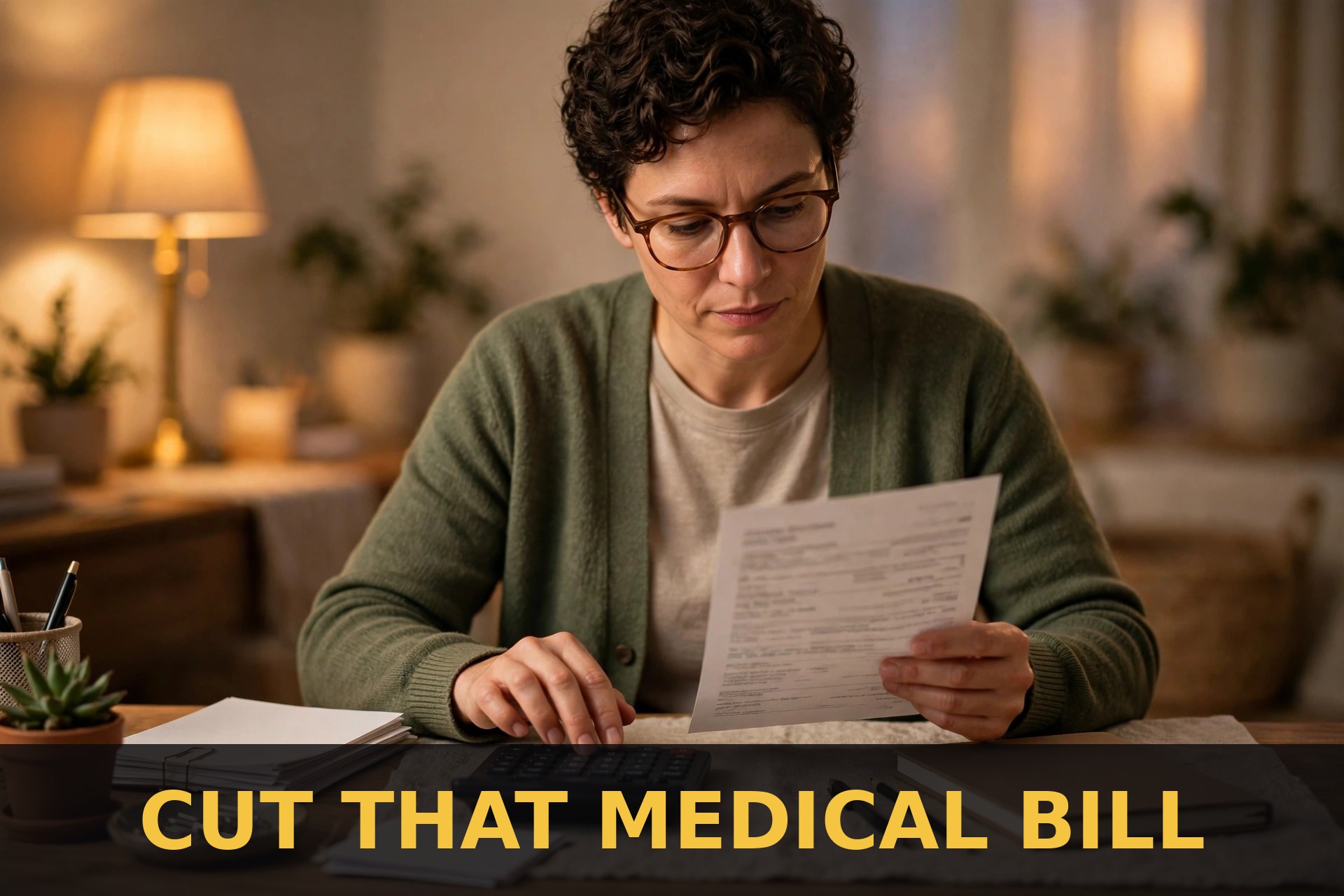
A medical bill lands in the mailbox, and the number is bigger than your rent. Your first instinct might be to pay it quickly just to make it go away — or to ignore it and hope it goes away on its own. Neither is a great plan.
Here is the thing most people never learn: a medical bill is often a starting point, not a final price. Bills contain errors more often than you'd expect, hospitals run assistance programs many patients never hear about, and billing departments negotiate every day. You just have to ask — in the right order. This guide walks through that order.
The Short Answer
A medical bill is usually a starting point, not a final price — so do not pay it quickly, and do not ignore it. Ask for an itemized bill, check it for errors, and ask about financial assistance before you start negotiating, because assistance can lower the balance before any haggling begins. Then negotiate the balance itself, and if you cannot pay it all, get a payment plan in writing.
Step 1: Ask for an Itemized Bill
Before you pay anything, call the billing office and ask for a fully itemized bill — a line-by-line list of every charge, code, and service. The summary statement you received first ("amount due: $2,400") tells you almost nothing. The itemized version tells you everything.
Hospitals and providers will supply this on request, usually at no charge. If you have insurance, also pull up your Explanation of Benefits (EOB) from your insurer, so you can compare what the provider charged with what your insurer says it processed.
While you wait for paperwork, note the date on the bill and any due date. Asking questions does not automatically pause a due date, so keep track of it — and if you need more time, say so on the call and note the name of the person you spoke with.
Step 2: Check the Bill for Errors
Billing mistakes are common, and finding even one can cut the balance before any negotiation starts. Read the itemized bill slowly and look for:
- Duplicate charges — the same test, scan, or supply listed twice
- Services you never received — a procedure or medication that doesn't match your visit
- Wrong quantities or days — charged for three days in a room when you stayed two
- Charges that should have been bundled — supplies billed separately that are normally part of the procedure charge
- Insurance not applied — a service your EOB shows was covered, still sitting in your balance
If something looks wrong or simply unclear, call and ask the billing office to explain that line. Sometimes it's a misunderstanding. Sometimes it's a genuine coding error the provider needs to fix and resubmit to your insurer. Either way, get errors corrected first — there is no point negotiating a discount on charges you never owed.
One more check: if your care was an emergency, or you were treated by an out-of-network doctor at an in-network hospital, federal law (the No Surprises Act, in effect since 2022) protects patients from many surprise out-of-network bills in those situations. If that sounds like your bill, raise it with your insurer — some of those charges may not be yours to pay at all. This is general information, not legal advice; your insurer and the official guidance at cms.gov/nosurprises are the places to confirm your specific case.
Step 3: Ask About Financial Assistance Before You Negotiate
This is the step people skip, and it can be the biggest one. Nonprofit hospitals — which make up most hospitals in the US — are required under the Affordable Care Act to have a financial assistance policy, often called charity care. Depending on the hospital's policy and your income, assistance can reduce your bill substantially or, for some patients, forgive it entirely.
Ask the billing office directly: "Can I apply for your financial assistance or charity care program?" Many for-profit hospitals and large practices run assistance or hardship programs too, even though they aren't required to. You can usually apply even if the bill is a few months old.
If paperwork feels overwhelming, a free nonprofit called Dollar For (dollarfor.org) helps patients check whether they qualify for hospital financial assistance and apply. Applying takes some documents — usually proof of income — but it's worth doing before you agree to any payment arrangement. Also ask the hospital to pause collection activity while your application is being reviewed.

Step 4: Negotiate the Balance
If assistance doesn't apply — or after it has reduced what it can — it's time to negotiate what's left. Billing departments have more flexibility than the printed total suggests. Useful things to ask:
- "Is there a self-pay or prompt-pay discount?" Many providers accept less from patients paying directly, or paying a lump sum quickly.
- "Can you match closer to what an insurer would pay for this?" The sticker price on a bill is often far higher than the rates providers accept from insurance companies.
- "What is the lowest amount you can accept to settle this?" Then stay quiet and let them answer.
Be honest and specific about your situation: "I can afford $60 a month" is far more useful to them than a vague "I can't pay this." Politeness helps too — the person on the phone negotiates bills all day, and a calm, prepared caller is the easiest kind to help.
The same calm, prepared approach works on everyday bills too — our guide on how to negotiate a lower bill walks through scripts for internet, phone, and insurance bills.
Step 5: If You Can't Pay It All, Set Up a Plan — in Writing
If the remaining balance is still more than you can pay at once, ask for a payment plan. Two things to push for:
- Interest-free. Many providers offer in-house plans at 0% interest. Ask explicitly — a plan through the hospital is usually far cheaper than putting the bill on a credit card.
- A monthly amount you can actually sustain. A plan you default on helps no one. If $100 a month breaks your budget, say $60 and explain why.
Whatever you agree — a reduced lump sum, a discount, or a plan — get it in writing before you pay: the agreed balance, the payment amounts and dates, and confirmation that paying as agreed settles the account. Keep the letter or email with your receipts.
A Worked Example (Illustrative Only)
This example uses round, invented numbers to show the order of steps. It is not a promise of any discount — every provider and bill is different. Imagine a $2,400 emergency room bill:
| Step | What happens | Illustrative balance |
|---|---|---|
| Starting bill | Summary statement arrives | $2,400 |
| Error check | A duplicated lab charge is found and removed | $2,100 |
| Financial assistance | Patient qualifies for a partial hardship reduction | $1,500 |
| Negotiation | Prompt-pay discount agreed for paying within 30 days | $1,200 |
| Payment plan | Remaining balance split into interest-free monthly payments | $100/month for 12 months |
Your numbers could be better, worse, or the assistance step might not apply at all. The point is the sequence: errors first, assistance second, negotiation third, plan last. Each step can only shrink the number the next step works on.
What to Avoid
- Don't ignore the bill. Unpaid medical bills can eventually go to collections. A phone call early on keeps far more options open.
- Don't pay with a high-interest credit card just to "deal with it." That swaps a negotiable, often interest-free debt for an expensive one. If a provider offers a 0% in-house plan, it is usually the better route.
- Don't agree to a payment you already know you can't make. A smaller, honest number you can keep up with beats an optimistic one you can't.

Frequently Asked Questions
Can you really negotiate a medical bill?
Yes. Between error corrections, financial assistance programs, self-pay discounts, and payment plans, the first total is frequently not the final amount. Nothing is guaranteed — but asking costs nothing, and billing departments handle these conversations daily.
What if my bill already went to collections?
You can still act. Ask the original provider whether financial assistance can still be applied to the account, and keep records of every conversation. If a collection agency is involved, you can ask them to verify the debt and discuss a settlement or plan — and still get any agreement in writing before paying.
How long do I have to sort this out?
It varies by provider and state, so check the due date on your bill and ask the billing office directly what timeline you're on. The safest move is to start within the first billing cycle, while assistance applications and corrections are easiest.
What if I have insurance but the bill is still huge?
Compare the bill against your EOB line by line. A claim may have been denied over a coding error the provider can fix and resubmit, and you can appeal a denial by following the instructions on the denial notice. Start with your insurer's member line and ask them to walk through how the claim was processed.
Should I pay a small amount now to show good faith?
Only if it's part of an arrangement you've discussed and documented. Random partial payments without an agreement don't necessarily protect the account or pause anything. Make the call first, agree the plan, then pay.
Your Medical Bill Checklist
- Itemized bill requested (and EOB pulled up, if insured)
- Every line checked for duplicates, errors, and charges that aren't mine
- Insurance processing checked — denials questioned or appealed
- Financial assistance / charity care application asked about
- Self-pay or prompt-pay discount requested
- Settlement or payment plan negotiated to an amount I can sustain
- Interest-free plan asked for, instead of a credit card
- Agreement received in writing before paying
- Names, dates, and notes from every call saved
The Bottom Line
A medical bill feels final, but it usually isn't. Work it in order: get the itemized bill, fix the errors, ask about financial assistance, then negotiate what's left and put any agreement in writing. An hour of calm phone calls can change the number more than months of worrying about it.
For more ways to push back on everyday costs, explore our Budgeting Guides.
Disclaimer: This article is for education only and is not financial, medical, or legal advice. Programs, policies, and prices vary by provider and state, so confirm details with your provider, insurer, or a qualified professional for your situation.
Related guides
- How Much Should You Spend on Groceries for a Family of 4?
Wondering how much a family of four should spend on groceries? The USDA's September 2026 food plans put it between roughly $1,024 and $1,682 a month. See where your family fits — and how to spend less without eating worse.
- How to Do a No-Spend Month: Rules That Work
A no-spend month works when the rules are written before day one. Get the full allowed-vs-paused table, sensible exceptions, and the day-30 step that turns one strict month into lasting savings.
- How to Stop Impulse Buying — The Wish List, the Waiting Rule, and What Your Hours Are Worth
Impulse buying is not a willpower problem — it is a speed problem. One method combines a 30-day wish list with pricing things in your work hours, plus what to do after a slip.
Browse more step-by-step guides in the Budgeting hub.