How to Budget When You Get Paid Every Two Weeks
Luci Shut
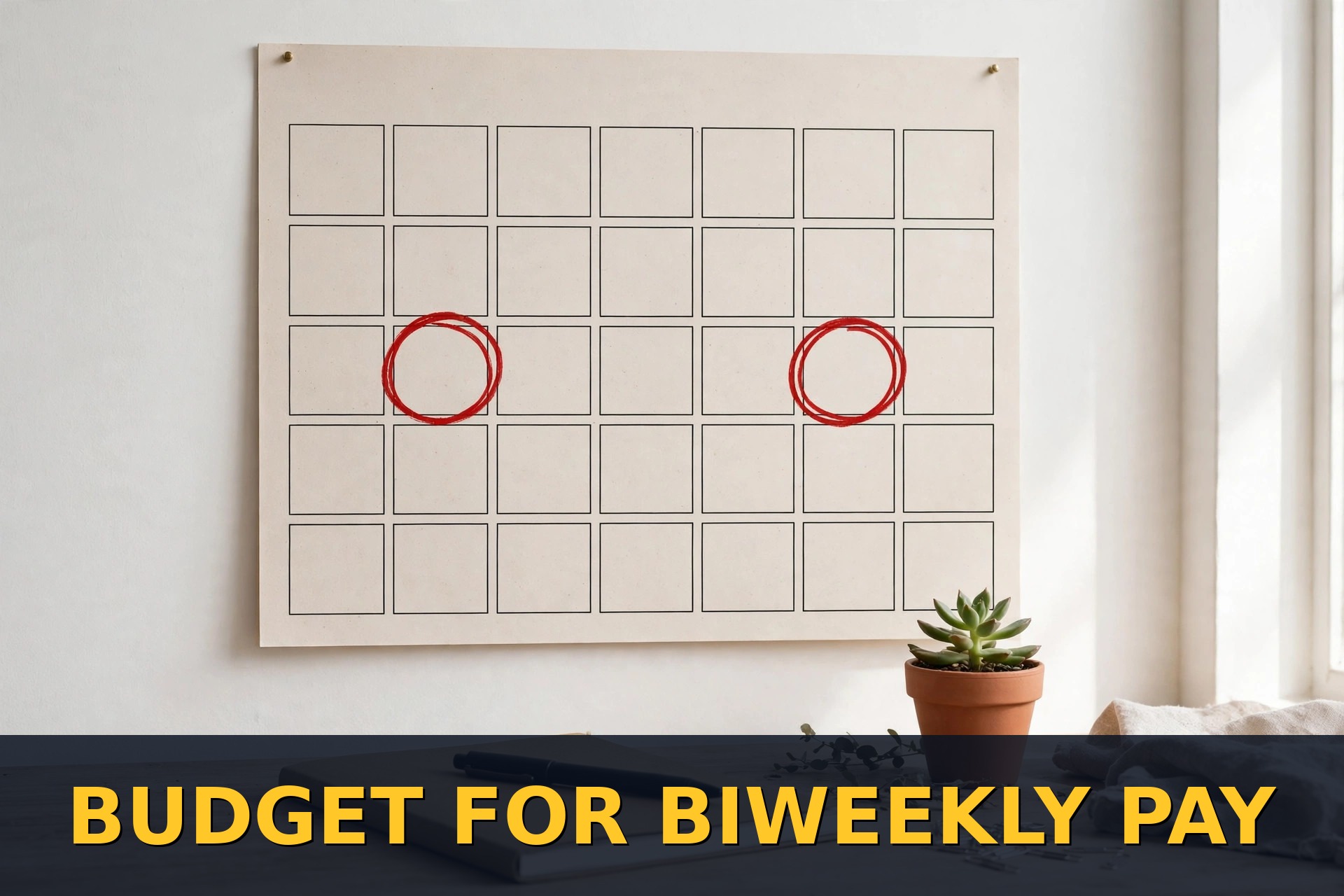
Getting paid every two weeks sounds simple until you try to match it to monthly bills. Rent is monthly. The electric bill is monthly. But your pay arrives 26 times a year, not 24 — and some months you get two paychecks, while twice a year you get three.
That mismatch is why biweekly budgets feel bumpy even when the yearly maths is fine. The fix is to stop budgeting by the month and start budgeting by the paycheck. Here is how.
The Short Answer
Budget by the paycheck, not by the month. You are paid 26 times a year, so most months bring two paychecks and twice a year you get three — the fix is to list your bills by due date, split the big ones in half across two paychecks, and give every payday a two-minute routine. That way the yearly maths works, even when a single month looks bumpy.
The Two Rules of a Biweekly Budget
Rule 1: Budget as if you only get two paychecks a month. Two paychecks a month, twelve months a year, is 24 paychecks. You actually receive 26. If your regular budget runs on 24, the two "extra" paychecks each year are not needed for bills — they can go straight to savings, debt, or annual costs. This one rule removes most of the stress.
Rule 2: Every paycheck gets its own job list. Instead of one monthly plan, each check covers a specific set of bills — the ones due before the next check arrives. When each dollar is assigned to a payday, the "where did it all go?" feeling mostly disappears.
If you are new to giving your pay a plan at all, start with our guide on how to budget your first paycheck, then come back and split that plan across your two checks.
Step 1: List Your Bills by Due Date
Write down every regular bill and the day of the month it is due: rent or mortgage, utilities, phone, internet, insurance, loan payments, subscriptions. Then mark your paydays on the same calendar — actual dates, not "every other Friday" in your head.
Now match them up. Bills due in the first half of the month belong to the first paycheck; bills due in the second half belong to the second. Anything due right after a payday is that check's job. You are simply making sure no check is asked to cover more than it can.
Step 2: Split the Big Ones in Half
Rent is the usual budget-breaker: one huge payment that lands entirely on one paycheck. If your landlord or lender allows it, you can still prepare for it in halves even if you pay it in one go — set aside half the rent from the first check, untouched, and add the second half from the next check. The payment is monthly; your saving for it is per-paycheck. The same trick works for car insurance, annual subscriptions, and anything else too big for one check.
Some people keep this "half" money in a separate bills account so it is never accidentally spent. If you use one account, a simple note or spreadsheet line works too — the label is what protects it.

A Worked Example (Illustrative Only)
This example uses round numbers to show the structure. It is illustrative only — not real household data — and your pay and bills will differ.
Imagine take-home pay of $1,600 every two weeks. The budget runs on two checks a month:
| Paycheck | Covers (illustrative) | Amount |
|---|---|---|
| Check 1 | Half the rent set aside ($600), utilities ($120), phone ($60), groceries ($300), transport ($120), savings ($100), spending ($300) | $1,600 |
| Check 2 | Second half of rent ($600), insurance ($140), loan payment ($180), groceries ($300), transport ($120), savings ($100), spending ($160) | $1,600 |
Twice a year, a third paycheck lands in a month. Because the budget never counted on it, that whole check can follow a plan of its own — for example, half to savings, some toward debt, some toward an annual bill. Deciding before it arrives is what stops it evaporating.
Step 3: Give Every Payday a Two-Minute Routine
On payday, before spending starts:
- Move the savings amount out.
- Set aside the halves of any big bills this check is carrying.
- Check which bills fall due before the next payday, and confirm the money for them is sitting ready.
That is the whole routine. Paired with a quick end-of-month review — our monthly money reset checklist is built for exactly this — the system mostly runs itself.
What About Months That Feel Short?
Even with a good split, some pay periods line up badly: three bills land in one check's window, or a car repair shows up uninvited. Two cushions help. First, build a small buffer in your bills account — even $100 to $200 evens out the timing bumps. Second, remember the third-paycheck months are coming; a tight fortnight is a timing problem, not a total-income problem, and it helps to treat it that way.

Frequently Asked Questions
How many paychecks do you get when paid every two weeks?
26 paychecks a year. Most months have two, and two months of the year have three — those two extra checks are the ones your budget should treat as a bonus, not as regular income.
Should I pay bills from each paycheck or once a month?
Paying (or at least setting aside) from each paycheck matches your cash flow and avoids one check carrying the whole month. If a bill is due before your second check, it belongs to the first check's plan, even if you schedule the payment itself for the due date.
What should I do with the third paycheck?
Decide in advance. Common choices: build or top up savings, make an extra debt payment, or pre-pay annual costs like insurance. The only wrong answer is letting it drift into everyday spending by accident.
Can I ask to move a bill's due date?
Often, yes. Many utilities, card companies, and lenders let you shift a due date so it lands just after a payday. One phone call per bill can permanently smooth out a bumpy calendar.
Is a biweekly budget different from a monthly budget?
The yearly numbers are the same; only the timing plan changes. You budget per paycheck (26 periods) instead of per month (12), and your regular plan is built on 24 of those checks.
Your Biweekly Budget Checklist
- All bills listed with due dates, next to my actual paydays.
- Budget built on two paychecks a month — not three.
- Big bills like rent split into per-paycheck halves.
- Each paycheck has its own list of bills to cover.
- A plan written down for the two third-paycheck months.
- A small buffer started for badly-timed weeks.
- Payday routine: save first, set bill money aside, check what's due.
The Bottom Line
Learning how to budget when you get paid every two weeks is mostly a calendar skill. Build the plan on two checks a month, give each check its own bills, split the big payments in half, and treat the two extra paychecks each year as the gift they are. The bumps smooth out, and payday stops feeling like a rescue and starts feeling like a routine.
For more paycheck-friendly planning, explore our Budgeting Guides.
Disclaimer: This article is for general education only and is not financial, legal, or tax advice. Everyone's finances are different, so consider your own situation, and speak to a qualified professional if you need personal financial guidance.
Related guides
- How to Save $1,000 in 3 Months (A Week-by-Week Plan That Fits Real Paychecks)
Saving $1,000 in three months is about $77 a week, thirteen times. A week-by-week plan that fits real paychecks: automate it on payday, find the weekly amount in your current spending, and track it somewhere visible.
- Sinking Fund Categories: The Complete List, Prioritised by Your Situation
Long sinking fund category lists do not tell you where to start. Prioritised starter sets by situation - renter or homeowner, car or no car, kids or no kids - so you can pick your first 3 to 5 funds.
- What Bills to Pay First When Money Is Tight (A Calm Priority Order)
Can't cover everything this month? A calm priority order for tight months: housing, utilities, food and transport before unsecured debt — plus who to call before you miss a payment.
Browse more step-by-step guides in the Budgeting hub.