How to Negotiate a Lower Bill in 2026
Luci Shut

You open a bill, stare at the total, and think: when did this get so expensive? Internet, phone, insurance — they often creep up a few dollars at a time until the number feels unfamiliar.
Asking for a lower bill is not rude or only for confident deal-makers. It is an ordinary customer conversation. You need a little preparation, a polite opening, and a clear idea of what would help. This guide covers the steps, with examples for internet, phone, and insurance bills. A calm call will not work every time, but it is often worth fifteen minutes.
Why Bills Creep Up
Bills rarely jump all at once. A promotional rate ends, a plan quietly changes, or you keep paying for service you no longer use. Perhaps you chose the fastest internet package when three people worked from home, and now the house is quieter. Perhaps your phone plan still includes extras you never open.
So start with the bill itself, not the call. Look at what you pay each month, what the plan includes, and anything that surprises you. A charge you do not recognise is worth a question on its own. Also note what you actually use — browsing and streaming, or working with large files — since describing real usage in plain language helps the other person find the right plan, not just a cheaper one.
Before You Call: Five Minutes of Preparation
Write down your monthly amount, the plan name if shown, and one or two outcomes you would accept — a lower rate, the same rate for longer, or a plan that fits your usage. Note anything that has changed since you signed up, such as how long you have been a customer or how much data you now use. If you genuinely know of a comparable plan elsewhere, mention it calmly; do not invent an offer you have not seen.
Pick a quiet moment, keep account details nearby, and have a pen ready. If the call goes well, note the new amount, when it starts, and who you spoke with. If you are sorting out several charges, our guide on how to audit your subscriptions and save can help you check what to keep, pause, or cancel.
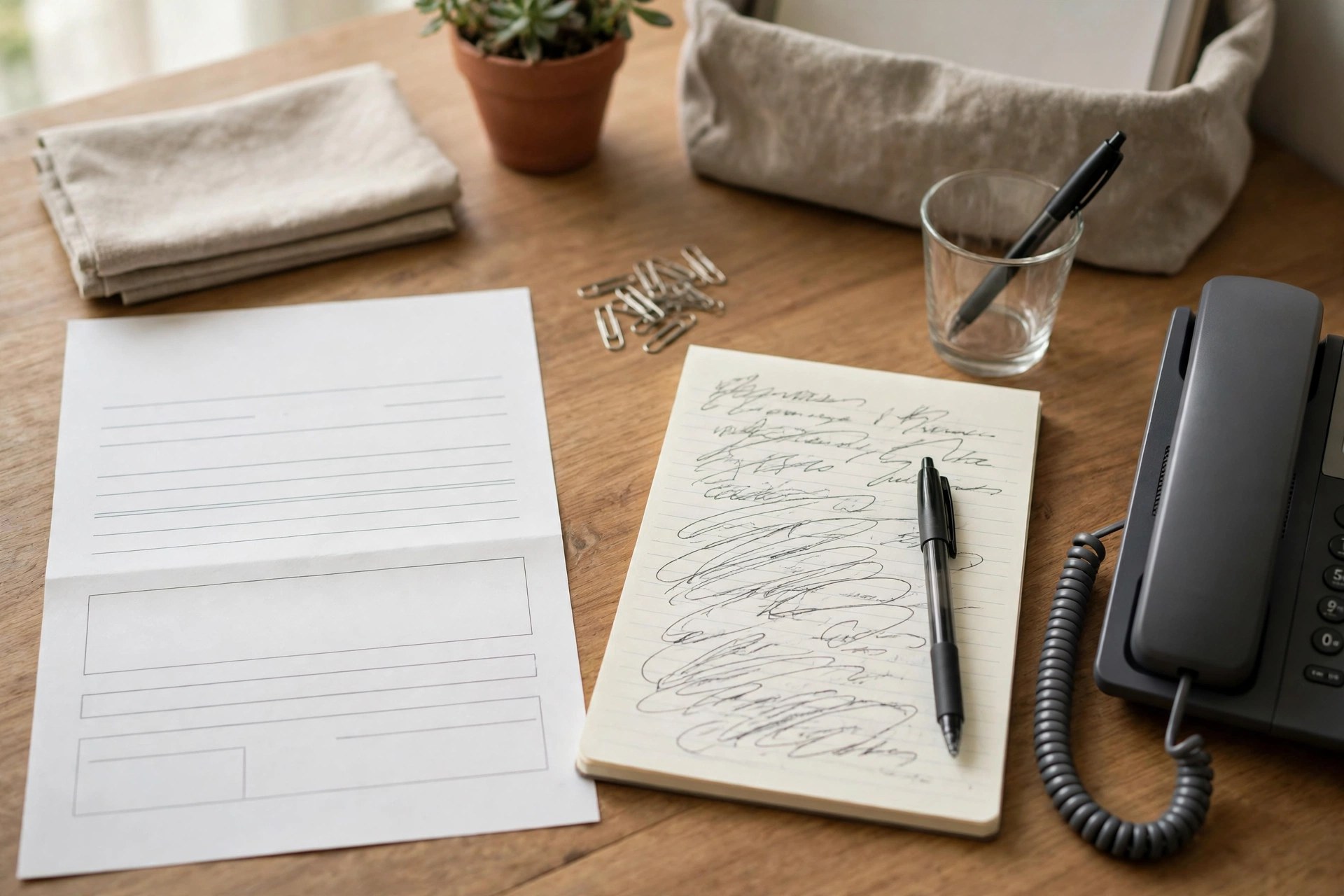
The Call Itself: Polite, Specific, and Patient
Treat the call as a conversation, not a confrontation. The person answering did not set your price. A simple structure works well:
- Say who you are and why you are calling.
- Mention you have been a customer and would like to stay, if the price can work better.
- Ask plainly about a lower rate, a current promotion, or a plan that fits your usage.
- Listen before responding — the first offer is not always the only one.
- If you need time, say so. You do not have to accept on the spot.
A short pause after your question is normal. If they offer something that helps, even partly, take it seriously. If they cannot help today, ask whether another team handles plan changes. Avoid bluffing about leaving if you do not mean it: you like the service, the price has become difficult, and you are exploring your options.
A Simple Script You Can Adapt
You need not read this word for word, but having opening lines ready takes the pressure off:
"Hi, my name is [your name]. I have been a customer for a while, and I am calling because my monthly bill has gone up and I would like to see if there is a better option for me. I am happy with the service, but the current price is getting hard to fit into my budget. Could you check whether there is a lower rate, a current promotion, or a plan that matches how much I actually use?"
If they offer a new rate, ask:
"Thank you — that sounds helpful. When would the new rate start, how long would it last, and would anything else on my plan change?"
If the answer is no, close calmly:
"I understand. Thank you for checking. Is there a better time to ask again, or anything I should know before my plan renews?"
Internet, Phone, and Insurance: What to Ask
For internet, ask about speed versus need. If you pay for the fastest tier but mostly browse, stream, and video-call, a mid-tier plan may feel the same. Ask what speeds cost less, and whether you pay for equipment you no longer need.
For a phone bill, look at data, lines, and extras. Ask whether your allowance still matches your use, whether unused lines are active, and whether unused add-ons can be removed.
Insurance is different: the right cover matters more than the lowest price. Do not drop cover you need to save a few dollars. Ask what affects your premium, whether your details are up to date, and whether a different excess or payment pattern would change the cost. Mention changed circumstances, such as mileage or who is covered.
In every case, check the small print: how long the new price lasts, what happens when it ends, and whether changing plans carries a fee.

An Illustrative Example: What a Small Saving Adds Up To
Here is a concrete example with round, illustrative numbers — not a promise, and not data from any real provider. Suppose your internet bill is $80 a month, and a calm call moves you to a plan that fits your usage at $65 a month: $15 less per month.
| Monthly amount (illustrative) | Over 12 months (illustrative) |
|---|---|
| Before the call: $80 | $960 |
| After the call: $65 | $780 |
| Difference: $15 less per month | $180 less over a year |
That $180 is real money: part of a holiday fund, a few weeks of groceries, or breathing room in a tight month. This is illustrative only, and some calls end with no change — but even then, you will have checked your plan and learned when to ask again.
If the Answer Is No
A "no" stings, but one representative can only offer what their system allows that day. Ask politely whether another team handles plan changes, or whether there is a review date worth noting. You can also call again before renewal, compare genuinely comparable alternatives, or decide the service is worth its price. None of those is a failure. Keep a short note of the call — date, name, and outcome — so a follow-up is easy. For more guides, see our Budgeting Guides hub.
Your Negotiation Checklist
- Read your latest bill and note your current monthly amount.
- Check what your plan includes and whether it fits your usage.
- Decide what a good outcome would look like.
- Call at a calm moment, with account details and a pen nearby.
- Open politely, say you would like to stay, and ask about a lower rate or better-fitting plan.
- Ask when any new rate starts, how long it lasts, and what else changes.
- Write down the outcome, the person's name, and any follow-up date.
- Check your next bill to confirm the change appeared.
Frequently Asked Questions
Is it rude to ask for a lower bill?
No. Providers expect these calls. Asking politely about a better rate or a fitting plan is a normal part of being a customer — you are asking about your options, not asking for a favour.
Do I have to threaten to leave?
No, and it is usually better not to. Saying you are exploring your options and would like to stay if the price can work is honest and effective. Empty threats can close a conversation down.
What if I get nervous on the call?
That is completely normal. Having your opening lines written down helps, as does remembering that the person on the other end handles calls like this all day. You can pause and say, "Let me just check my notes."
The Bottom Line
Negotiating a lower bill is not about being pushy. It is about paying attention: reading the bill, knowing what you use, asking a clear question, and listening to the answer. Some calls save money; some confirm your plan is already right. Pick one bill this week, read it properly, make the call in a quiet moment, and write down what happens.
Disclaimer: This article is for general education only and is not financial, legal, or tax advice. Prices, plans, and policies vary by provider and location, and any example figures are illustrative only. Check your own plan's terms before making changes, and consider speaking with a qualified professional for advice about your specific situation.
Related guides
- How to Budget With Irregular Income: A Calm Plan for Paychecks That Change
Learn how to budget with irregular income: base your plan on your lowest month, build a buffer in good months, and pay bills in priority order so a slow month stays calm.
- How to Do a No-Spend Week in 2026: A Simple 7-Day Reset That Actually Feels Doable
How to do a no-spend week: set your own rules, stock the kitchen, plan free activities, and use seven days to notice where your money usually slips away.
- How to Save for Moving Costs in 2026: A Simple Plan That Actually Works
How to save for moving costs and a security deposit: list every cost, get real quotes, add a buffer, and save a fixed amount each payday so the big bills do not land all at once.
Browse more step-by-step guides in the Budgeting hub.